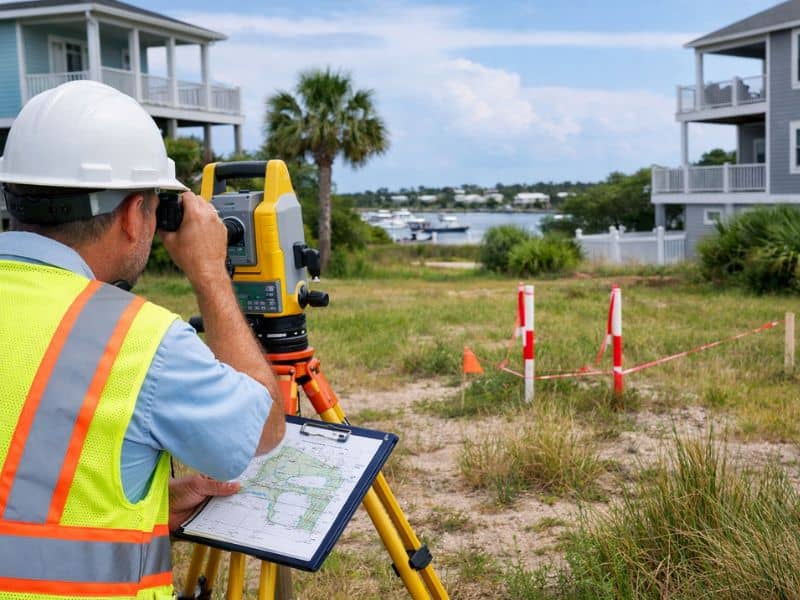
Buying land in a coastal city like Wilmington comes with more uncertainty than most buyers expect. A lot survey is now more important than ever as flood maps and coastal regulations continue to change. What worked a few years ago may no longer apply today.
What Recent Coastal Changes Mean for Land Buyers
Recent FEMA flood map updates and growing coastal risk awareness are changing how properties are evaluated across North Carolina. Areas near water or with drainage concerns may now fall under new classifications.
For buyers in Wilmington, this means paying closer attention to elevation, setbacks, and usable land. Even small differences in property data can affect permits, insurance, and timelines. A lot survey provides the verified details needed to move forward with confidence.
Why a Lot Survey Matters Before Building
A lot survey does more than show property lines. It helps confirm what you can actually do with the land.
Without it, buyers often rely on visual assumptions or outdated records. In a coastal market, that can lead to early mistakes—like placing a structure too close to a boundary or inside a setback area.
Getting support before finalizing your land purchase helps catch these issues early, before they affect your plans or budget.
What a Lot Survey Actually Verifies
A lot survey gives you a clear view of the property. It compares official records with what is actually on the site.
It shows boundary lines, structures, and access points. It also helps spot problems, like encroachments or areas too close to setbacks. These details help you understand how the land can really be used.
Here’s a clean, paragraph-style version that reads smoothly and is easy to follow:
Common Issues Found in Coastal Properties
Properties in Wilmington often face challenges related to water flow and soil conditions. Over time, these factors can affect how the land can be used or developed.
In many cases, boundary lines do not match what is visible on-site, and structures may be placed too close to setback lines. Drainage issues can also limit where building is possible, while nearby properties may create encroachments that are not obvious at first.
These problems are easy to overlook during a simple walkthrough, but they can lead to delays, added costs, or changes to your plans later.
How to Avoid Delays and Costly Mistakes
The best time to order a lot survey is early. Do this before making final decisions.
Waiting too long can lead to delays, redesigns, or extra costs. Reviewing survey results early helps you make better choices and avoid surprises.
Getting help understanding your land before building makes it easier to move forward with confidence.