
Properties near airports in Wilmington, North Carolina, face unique development challenges. Height restrictions, airspace protections, and land use conditions often apply, even when they aren’t immediately visible on standard zoning maps.An ALTA Survey for airport land plays a crucial role in uncovering hidden restrictions early. By combining physical site mapping with legal document review, the survey identifies conditions tied to FAA zones, approach paths, and airport overlay districts. This clarity helps landowners and developers plan effectively, reduce delays, and avoid costly legal complications before starting any project.
Land Use Complexity Around Airport-Adjacent Properties
Land near airports may seem open and ready for use, but many parcels are governed by layers of local and federal rules. These rules are often created to protect aircraft, passengers, and people on the ground.
In many cases, the land falls under:
- FAA obstruction limits
- Local airport zoning overlays
- Public safety or noise buffers
Some properties may also have outdated or unrecorded restrictions that were never removed, even if nearby airport layouts have changed.
Role of ALTA Survey in Defining Legally Recognized Boundaries
ALTA Surveys are more detailed than standard boundary surveys. They provide legal boundary clarification near airports by checking land descriptions, comparing them with visible features, and reviewing documents that impact land use.
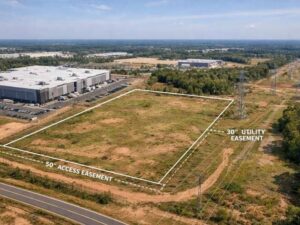
This is especially helpful near airports where even small boundary mistakes can create conflicts. ALTA Surveys show where your land ends, where easements begin, and whether anything overlaps into protected airspace. That level of detail gives project teams and legal advisors a solid starting point.
Reviewing Title Commitments for Air Rights and Height Restrictions
One key part of the ALTA Survey process is checking the title commitment, especially Schedule B-II. This part lists legal items that may limit how a property can be developed.
In airport areas, that may include:
- Height easements limiting how tall buildings or trees can be
- Access rules for maintenance of flight paths or lighting systems
- Land use conditions tied to safety zones or buffer areas
ALTA Surveys help link what’s on paper with what’s visible on the ground so nothing is missed during planning.
Detecting Conflicts Between Intended Use and Recorded Limitations
Many developers don’t realize their plans won’t work until it’s too late. For example, someone may plan to build a multi-story structure only to learn that FAA height rules make it impossible.
ALTA Surveys help detect these issues early by:
- Comparing site plans with local zoning and FAA maps
- Finding mismatches between planned use and recorded easements
- Spotting risks tied to lighting, reflectivity, or rooftop installations
This information allows adjustments before time and money are spent on the wrong plan.
Supporting Permitting and FAA Coordination with Survey Documentation
FAA rules require formal reviews for anything built near flight paths. That means a developer must often file a Form 7460-1, especially if a structure may affect air traffic.
Having a recent ALTA Survey helps by:
- Showing exact parcel size and location
- Confirming compliance with airport overlay boundaries
- Speeding up coordination with local planning staff and airport officials
Without this survey, project teams may face repeated reviews, slow approvals, or complete redesigns.
Legal Clarification in Aviation-Adjacent Land Holdings
Even if no immediate development is planned, an ALTA Survey adds long-term value for properties near airports. It becomes part of the record for future owners, planners, and legal teams.
It helps with:
- Smooth resale by showing verified boundaries and legal use
- Easier permitting for future upgrades or new construction
- Protecting property value by avoiding encroachment or safety issues
When legal limits are clear, projects move forward with fewer surprises.
FAQs
1. What does an ALTA Survey show on land near airports?
It shows boundaries, easements, and legal restrictions—especially those linked to FAA zones or airport overlays.
2. Why are FAA height limits a problem during development?
They can stop a project if a planned building or tower interferes with airspace or safety zones.
3. What is Schedule B-II in the title commitment?
It’s the section that lists easements, rights-of-way, and other recorded items that limit land use.
4. Do I need an ALTA Survey for airport-adjacent land even if I’m not building yet?
Yes. It helps you understand what you can or cannot do with the property and it protects your long-term plans.
5. Can an ALTA Survey speed up the permit process?
Yes. It gives reviewers clear, accurate data that matches legal records and reduces the chance of delays.