Land auctions move fast. You see a parcel, you like the price, and the bidding starts before you’ve had time to ask the right questions. A property survey slows that process down just enough to protect you. In North Carolina, where rural tracts, timberland, and rezoned lots often hit the auction block, skipping a survey can turn a good deal into a legal headache. Here’s why developers should never bid blind.
Auctions reward speed, but ownership rewards accuracy. A property survey gives you facts before you commit money you can’t get back.
Auction Properties Often Come With Limited Property Information
Traditional real estate deals give you weeks. You get inspections, disclosures, and title work before you sign anything. Auctions don’t work that way.
Most auction listings give you:
- A parcel number
- A rough acreage estimate
- A tax map or plat that may be decades old
- Little to no seller disclosure
Sellers at auction, often banks, estates, or county tax offices, rarely know the property well. They’re moving inventory, not selling a home they lived in. That means fewer answers if you ask questions.
This gap matters more in North Carolina than in many other states. Large rural parcels, family land splits, and older deeds are common here. A deed from 1965 might describe boundaries using a tree that no longer exists. Without a current survey, you’re bidding on guesswork.
Order a survey before auction day if the timeline allows it. If it doesn’t, build survey costs and risk into your maximum bid. Never assume the listing tells you everything.
Unrecorded Site Conditions Can Affect Future Land Use
Public records show what’s on paper. They don’t show what’s on the ground.
A parcel might look clean in county records but hide problems a walk-through or survey would catch:
- Old foundations or septic systems from a prior structure
- Fences or sheds built by a neighbor on what they assumed was their land
- Signs someone has been using the property without permission
- Drainage paths that don’t match recorded easements
These details matter if you plan to build, subdivide, or develop. A property survey paired with a site visit shows you what’s actually there, not just what the tax map claims.
Why This Matters for Developers
If you’re buying for development, unrecorded conditions can delay permits or force redesigns. Catching them early saves money later.
Property Access Is Not Always as Straightforward as It Appears
A parcel might show a road running right next to it on a map. That doesn’t mean you have legal access to that road.
North Carolina has plenty of landlocked parcels, especially in rural counties. Some only have access through:
- A private easement that may or may not transfer with the sale
- A shared driveway with unclear rights
- No legal access at all, just a path that’s been used informally for years
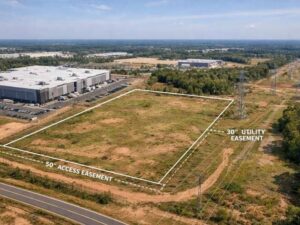
Auction listings rarely spell this out clearly. A property survey identifies recorded easements and shows where legal access actually exists, not where it looks like it should.
Before You Bid
Pull the recorded easements. Check if access is guaranteed in writing. If the property is landlocked, factor that into your bid or skip it entirely.
Auction Buyers Often Inherit Existing Boundary Evidence
Fences, tree lines, and old stone walls feel like boundaries. Often, they aren’t.
These features show where someone, maybe decades ago, believed the line was. They don’t carry legal weight unless a recorded survey confirms them. In North Carolina, where land has been split among family members for generations, this mismatch is common.
A property survey shows you:
- Where the legal boundary actually sits
- Whether existing fences or walls match that line
- If neighboring structures encroach on the parcel
- Where any disputed boundary evidence exists
Why This Matters Before You Bid
If you assume a fence is the boundary and it’s not, you might be buying less land than you think, or inheriting a dispute with a neighbor who’s used that space for years.
A Survey Creates a Stronger Foundation for Post-Auction Planning
Once you win the bid, the real work starts. A property survey gives you a clean starting point for whatever comes next.
It supports:
- Building permits. Most counties require a current survey before approving construction.
- Financing. Lenders often require a survey before approving a construction loan.
- Subdividing. You need exact boundaries before splitting a parcel.
- Resale. Future buyers will want survey documentation, especially after an auction purchase.
Buying at auction already carries more risk than a traditional sale. A survey is one of the few tools that brings that risk back down to a manageable level.
Frequently Asked Questions
Do I need a survey before bidding at a land auction?
It helps, but it’s not always possible given tight timelines. If you can’t get one before bidding, get one immediately after winning, before any development decisions.
What’s the difference between a tax map and a property survey?
A tax map is a rough county estimate used for taxation. A property survey is a precise, legally recognized measurement of your actual boundaries.
Can a survey reveal access problems before I bid?
Yes. A survey combined with a title search can show recorded easements and confirm whether legal access exists.
Who pays for a survey on auction property? T
he buyer typically covers this cost after winning the bid, unless the auction terms state otherwise.