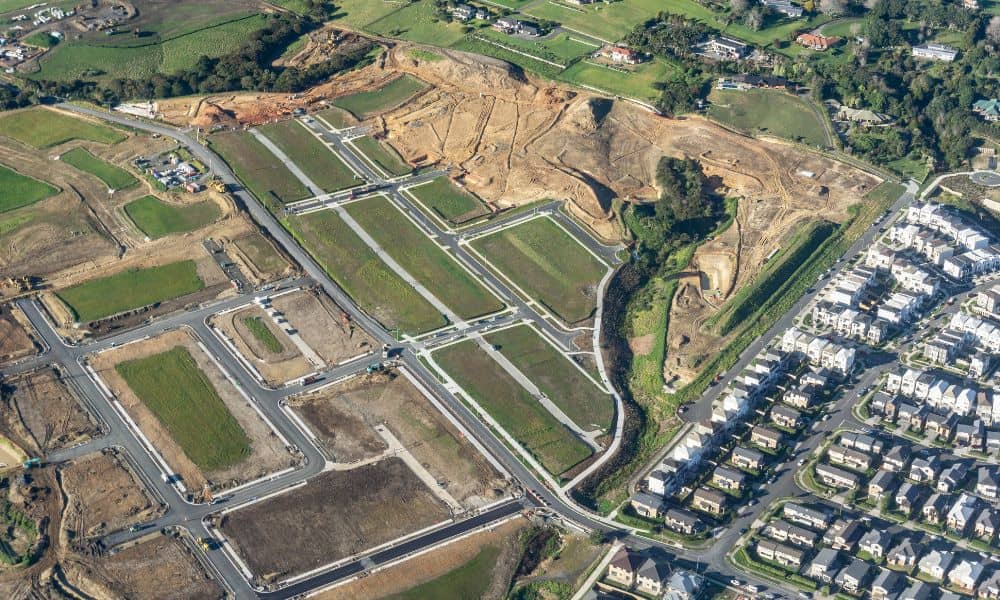
You found a piece of land. It looks big enough. You start thinking about splitting it into a few lots.
Then the plan hits review. And it stalls.
That happens a lot. Most subdivision plans don’t fail because of bad ideas. They fail because something basic was missed early.
Before you draw lines, you need to check what actually controls the land.
What Should You Verify Before Splitting a Parcel?
Before you split land, you need to confirm access, utilities, parcel boundaries, zoning limits, and usable space. Each lot must stand on its own. If one of these fails, the whole plan slows down or gets sent back for changes.
What Does Subdivision Planning Actually Require?
Subdivision planning means more than dividing land on a map. Each new lot must work in real life.
What makes a lot buildable?
- It must connect to a road
- It must support a home or structure
- It must have access to utilities
If one lot cannot meet these, the layout breaks. That’s where many plans fall apart.
Why Do Subdivision Plans Get Rejected?
Plans often look fine at first glance. The problems show up during review.
Common reasons plans fail
- No legal road access
- Utilities can’t reach each lot
- Some land cannot be built on
- Lot size or spacing does not meet rules
The city does not ignore these. They send the plan back. That leads to changes, delays, and added cost.
Is Your Parcel Legally Ready to Be Subdivided?

Before anything else, check the parcel itself.
What to check first
- Do boundary records match actual conditions?
- Is the parcel clearly defined?
- Are there gaps in legal records?
Old records cause problems fast. If the parcel is not clean on paper, the process slows right away.
Does Every Future Lot Have Legal Road Access?
Each lot must connect to a road. Not just any path. It has to meet legal and physical access rules.
Access problems to watch for
- Landlocked sections behind other lots
- Narrow frontage that does not meet standards
- Entry points that are unclear or not approved
Open land can still fail here. Access is one of the top reasons plans get rejected.
Can Utilities Serve Each New Lot?
Utilities can stop a project before it starts.
Each lot needs:
- Water
- Sewer or septic
- Power
Utility limits that cause issues
- Existing systems cannot handle more homes
- Lines must be extended long distances
- Costs rise faster than expected
One connection is not enough. Each lot must be able to function on its own.
Are There Areas of Land You Cannot Build On?
Some parts of a property look usable but are not.
Common land restrictions
- Required buffer areas
- Easements tied to utilities or access
- Sections that must remain open
These reduce usable space. That affects how many lots you can create.
Ignore this step, and your layout won’t work later.
Will Your Layout Work in Real-Life Conditions?
A layout can look clean on paper and still fail in practice.
Layout issues that cause rejection
- Odd-shaped lots that cannot be built on
- Poor spacing between lots
- Leftover sections that serve no purpose
A good layout needs more than straight lines. It needs to make sense when someone builds on it.
What Are Raleigh’s Lot Size and Spacing Rules?
Local rules control how land can be divided.
Key planning limits
- Minimum lot size
- Required spacing between structures
- Setbacks from roads and boundaries
More land does not always mean more lots. These rules often reduce what you can actually create.
Raleigh follows its Unified Development Ordinance. That document sets these limits and guides approvals.
When Should You Start Subdivision Planning?
Start before you commit.
If you plan to:
- Buy land
- Split property
- Build multiple homes
Then planning should begin early. Waiting until after purchase limits your options.
How Early Planning Saves Time and Money
Early checks change everything.
- You avoid repeated plan revisions
- You move faster through review
- You use the land more efficiently
Subdivision review can take several weeks. Delays often come from missing details, not complex design.
Utility extensions can also add major cost per lot. That’s why early checks matter.