Missing corner markers are one of the most common reasons land survey cost goes up. When a surveyor arrives on site and the original monuments are gone, the job gets harder immediately. More time in the field. More time in the office. More research before anyone sets foot on the property. This article explains what happens when corners are missing and why that extra work adds to the final bill.
Why Missing Corner Markers Create More Survey Work
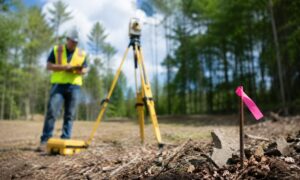
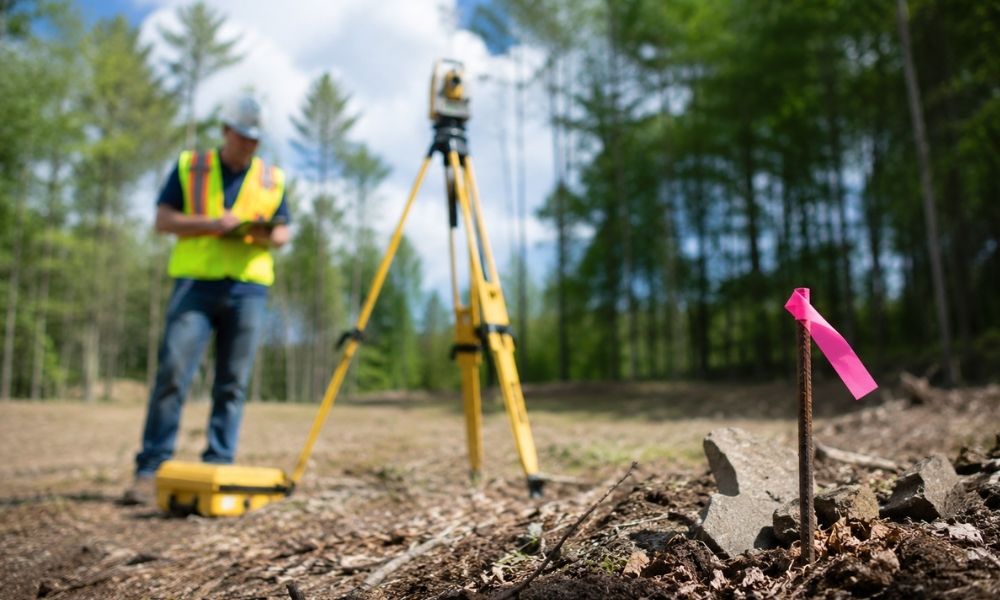
Surveyors always look for existing monuments first. Original iron pins, concrete monuments, or other markers set during a previous survey are the starting point for any boundary retracement.
When those markers are gone, the work does not stop. It expands.
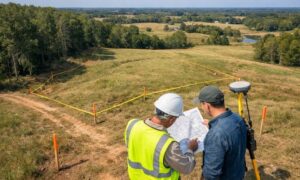
A surveyor must now gather physical evidence from the site, pull historical plats, review deed language, and check records from adjoining properties. Each of those steps takes time. The goal is to find enough consistent evidence to determine where the corner was originally placed.
That process can take a few extra hours or several additional days. It depends on how much documentation exists and how well the surrounding area has been surveyed before. Either way, the added work is reflected in the final cost.
Older Subdivision Records Can Slow Boundary Retracement
Older neighborhoods in North Carolina often come with older problems. Plats recorded decades ago may use measurements that no longer match current standards. Reference points mentioned in those plats may no longer exist. Some monuments were never set to begin with.
When a surveyor tries to retrace a boundary in an aging subdivision, they have to account for all of that. Calling deed distances and plat bearings into the field only works if the underlying records are reliable.
If they are not, the surveyor has to piece together a picture from multiple sources. That means more research before field crews can confidently locate or replace a missing corner. It also means more cost to the property owner.
This is not a flaw in the process. It is simply what thorough, accurate work requires.
Surveyors Often Search Beyond Your Property Lines
Here is something many property owners do not expect. Finding your missing corner may require work outside your property entirely.
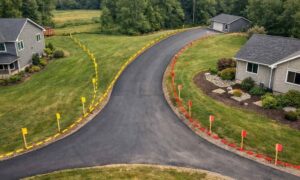
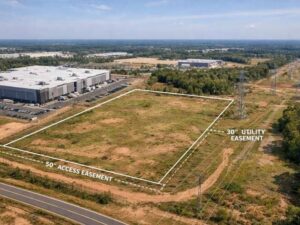
Surveyors may need to locate street monuments, subdivision control points, or original reference markers set far from your parcel. They may also check corners on neighboring lots to build a consistent picture of where boundaries were originally intended to fall.
That extended search is often necessary. A single missing corner cannot always be confirmed by looking only at one property. The surveyor needs enough surrounding evidence to support a defensible conclusion.
That extra fieldwork costs time and money. But it is the only way to replace a corner correctly.
Re-Establishing a Lost Corner Requires Professional Judgment
Replacing a missing corner is not a matter of guessing. It is a legal and technical decision.
Surveyors follow established principles for retracing boundaries. They weigh physical evidence found in the field, historical documents, recorded plats, and legal hierarchy when determining where a corner belongs.
A corner cannot simply be placed where it seems like it should go. The surveyor has to show their work. That includes documenting the evidence used, the methods applied, and the reasoning behind the final placement.
This level of professional judgment takes experience. It also takes time. When a corner is missing, that time gets billed to the project.
How Property Records Can Help Reduce Land Survey Cost
There is one area where property owners can make a real difference before the survey begins.
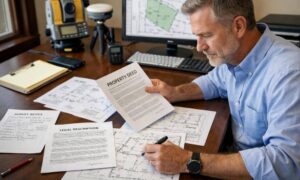
Gathering records ahead of time can reduce research time for the surveyor. Useful documents include:
- Prior surveys of your property
- Recorded subdivision plats
- Your current deed
- Easement documents
- Title insurance commitments or prior title reports
Providing these before the survey starts gives the surveyor a head start. They spend less time tracking down records and more time doing fieldwork.
That said, missing monuments can still require additional investigation even when records are available. The documents help, but they do not guarantee a simple job. If corners are gone, the surveyor still has to find enough evidence to support a replacement.
The records simply reduce the time spent looking. And in surveying, time is expensive.