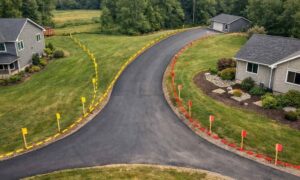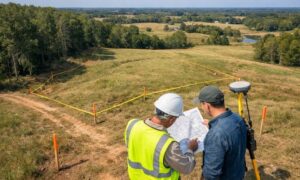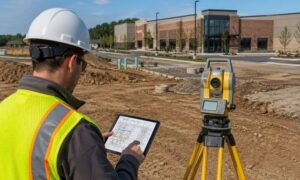
A boundary surveyor can find something most developers never check. A shared driveway used for decades may sit partly on the wrong property. In Charlotte, NC, this happens more than you might think. Older land, rural tracts, and split family properties all carry history. That history does not always show up on a title search. But it does show up on a survey.
If you are buying land, planning to build, or making changes near an existing driveway, read this first. A boundary survey can show you what is really there before you commit.
Why Long-Used Driveways Are Not Always Where Owners Think
Shared driveways change over time. An old path from the 1950s may have been widened later, paved, or slightly moved. None of those changes required a permit. None of them updated the county records.
The result is a driveway that looks permanent but does not match any document on file.
Using a driveway for 40 years is not the same as owning it. Developers who assume otherwise can buy a problem that was there long before they arrived.
Three things to know about long-used shared driveways:
- Physical location and legal location are two different things
- Informal changes happen often and rarely get recorded
- A neighbor may have allowed use without ever granting a legal right
A Boundary Surveyor Compares What Is on the Ground With What Is on Record
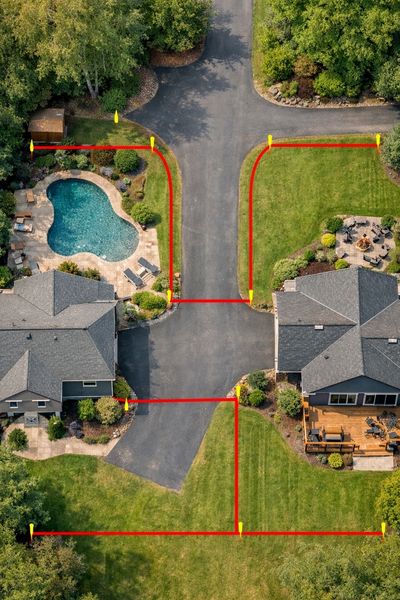
A boundary surveyor does more than measure lot lines. They compare what exists on the ground with what is recorded in public documents.
That includes fences, driveways, monuments, plats, deeds, and legal descriptions. When those things do not match, the survey report notes the difference. It does not decide who is right. It shows where things are.
On properties with shared driveways, surveyors often find:
- A driveway that crosses onto a neighboring parcel
- Boundary markers that were moved or disturbed over time
- Fences that follow old use lines rather than the actual property line
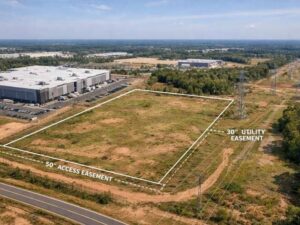
- Recorded easements that describe a different access route than what is being used
These findings do not create problems. They reveal problems that already exist. That matters when you are looking at a development site.
Older Rural Properties Often Come With Informal Access Arrangements
Much of the land around Charlotte was farmland not long ago. As the city grew, larger tracts were split among family members or sold in pieces. Those splits were not always done with proper surveys.
Informal access arrangements from that time are still common today. A gravel path that one family used to reach a back field may now be the only way to reach a separate parcel. An agreement between two neighbors was never written down. A handshake became the foundation for a driveway that two owners have shared ever since.
After two or three ownership transfers, that history disappears. A new owner sees a driveway and assumes it comes with the property. A boundary survey is the only way to find out if that is true.
This is especially common in areas just outside Charlotte where rural land patterns are still present in older parcels.
Driveway Problems Show Up When You Try to Make Improvements
A shared driveway that works fine today can become a serious issue the moment you try to improve it.
Paving a gravel path. Widening an access road. Installing a gate. Running utilities along the driveway. Any of these actions can lead to questions about where the driveway actually sits and whether you have the right to make changes.
If the driveway crosses a neighboring parcel, even partly, you cannot legally improve that section without permission from the adjacent owner. That conversation is much easier to have before you pour concrete.
Survey findings give developers clear, documented information about where problems exist. That lets you:
- Plan improvements within confirmed boundaries
- Find sections that may need additional documentation
- Avoid building on access infrastructure that may need to be moved
A Survey Report Creates a Clear Record for Future Decisions
A boundary survey report is a documented snapshot of existing conditions. It is based on measurements, not opinions.
That documentation is useful in many situations:
Before you buy: Knowing where a shared driveway sits helps you understand what you are getting and what problems may come with it.
Before you build: Site plans depend on accurate access information. If the construction driveway crosses a neighboring lot, that affects your project.
Before you sell or refinance: Lenders and buyers will ask about access. A current survey report gives answers based on measurement, not assumption.
Before you subdivide: Access that works for one parcel may not work for three. Survey documentation helps identify issues before a subdivision plan is drafted.
The cost of a boundary survey is small compared to discovering a driveway problem after a deal closes or construction starts.
Frequently Asked Questions
What can a boundary surveyor find out about a shared driveway?
A boundary surveyor can show where the driveway sits in relation to property lines. They can identify whether any part of it crosses onto a neighboring parcel.
Can a driveway be used for years without matching the property line?
Yes. Some driveways were built for convenience, not based on surveyed boundaries. Long-term use does not fix a location that does not match recorded documents.
Why are shared driveway problems more common on older properties?
Older properties have often changed hands many times. Informal access arrangements and undocumented land splits are common. Each ownership transfer adds more distance between current use and original records.
Does a boundary surveyor decide who owns a driveway?
No. A boundary surveyor documents locations and property boundaries. Ownership and legal rights are determined by recorded documents and, when needed, legal review.
When should a property owner look into a shared driveway?
Before buying, before building, before refinancing, before selling, or before making any major changes to the driveway. Earlier is almost always better.