When you buy commercial land near a data center, some of the biggest risks won’t show up on a property listing. Things like utility easements, deed restrictions, and shared infrastructure rights can sit on public record for years without anyone mentioning them during a site visit. In Charlotte, where data centers were built faster than the city’s infrastructure could handle, buyers who skipped a detailed survey review paid for it later.
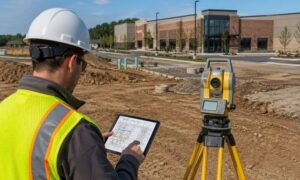
An ALTA survey is what catches those problems early. It goes further than a standard boundary survey by showing what legal rights are attached to a piece of land, who holds them, and what they mean for how the property can be used.
Charlotte’s Data Center Boom and the 2023 Moratorium
Between 2020 and 2024, the Charlotte area saw over 1.5 million square feet of data center space built or announced. Cloud companies and data storage providers moved in fast, drawn by Duke Energy’s power supply, strong fiber connections across the region, and land that was still affordable compared to markets like Northern Virginia.
That pace caused problems. In 2023, Charlotte-Mecklenburg planning officials put a temporary stop, called a moratorium, on new data center approvals in certain zones. The local power grid was running close to its limit, and city planners needed time to figure out how much strain all this new construction was putting on roads, utilities, and surrounding land.
For anyone buying nearby, this matters even if their property has nothing to do with data centers. Permits take longer now. Planned utility upgrades may be pushed back. And data center companies looking to expand may change course in ways that affect land right next to theirs.
Key Facts About the Moratorium
- It applied to industrial zones and some mixed-use commercial areas
- City planners are still reviewing noise levels, utility load, and traffic before lifting the pause
- Land next to existing data centers may face new distance or buffer rules once approvals open again
- A basic title search won’t catch these kinds of changes
How Being Near a Data Center Affects What You Can Build
Data centers need a lot of power. According to the Uptime Institute, a large facility can draw between 20 and 100 megawatts of electricity. That requires power lines, underground cables, and other infrastructure that often extends beyond the data center’s own property.
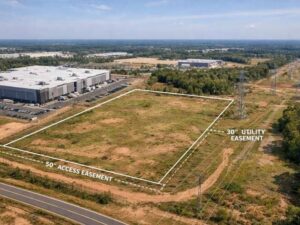
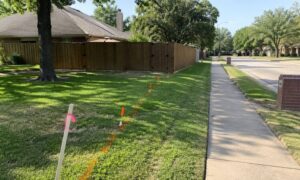
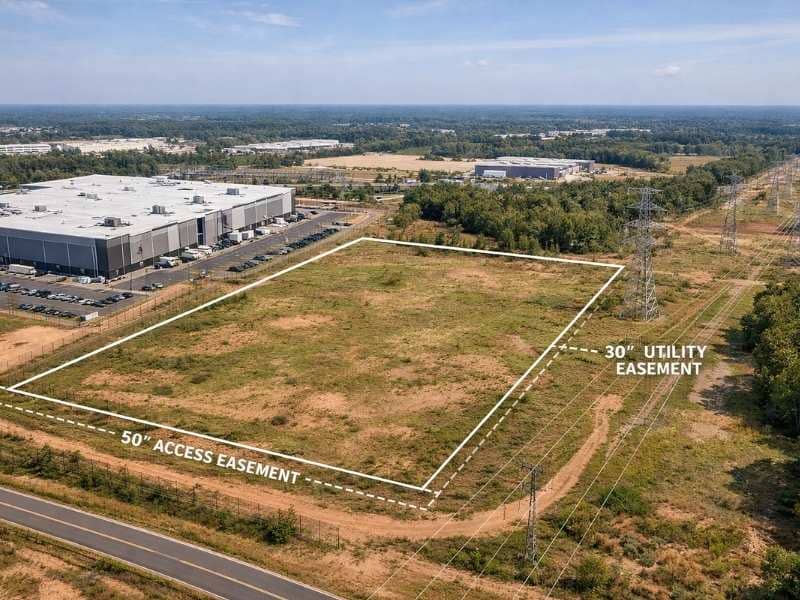
To make room for all of that, utility companies often record easements on neighboring land. An easement is a legal right that lets someone else use part of your property for a specific purpose, like running a power line or a fiber cable underneath it. A 30-foot easement cutting across your parcel may not be visible during a visit. But on a survey, it could sit right where you planned to put a building.
There are other things to watch for too. A data center company getting ready to build a second phase may have already made arrangements to buy land right next to yours. Road widening for heavy truck traffic can change where you enter and exit the site. Noise rules around cooling equipment can limit how close you’re allowed to build to a shared property line.
A standard property listing won’t mention any of this. Finding it takes a proper title and survey review.
What an ALTA Survey Shows That a Boundary Survey Doesn’t
A boundary survey tells you where your property lines are. That’s useful, but it doesn’t show you what legal rights others might have over the land or what restrictions are tied to the title.
An ALTA survey, which follows standards set by the American Land Title Association and the National Society of Professional Surveyors, goes much further. The current standards were updated in 2021. Surveys done under older versions may not include utility rights recorded in recent years.
What an ALTA Survey Documents
- Recorded easements: Legal rights that let utilities, local governments, or other parties use part of your land for power lines, fiber cables, or drainage
- Encroachments: Parts of a neighboring structure that cross onto your property
- Access rights: Documented rights that allow someone else to enter or cross your land
- Deed restrictions: Rules attached to the title that limit how you can build, sell, or use the property
- Setback and buffer notations: Required distances from property lines where building is not allowed
Near a data center, easements are usually the most serious issue. A power corridor or fiber line recorded ten years ago could run right through the spot where you want to build. Without an ALTA survey, you may not find out until after you’ve paid for plans and permits.
Why Lenders and Attorneys Ask for One
Most commercial lenders require an ALTA survey before they’ll approve a loan on commercial land. They need to confirm the property can physically support the project being financed. If a recorded easement runs through the planned building site, that changes what can be built and what the land is worth.
For developers, the survey maps exactly where every recorded claim sits on the property. Knowing that an easement exists in a title report is one thing. Knowing where it crosses your site is something else entirely.
Real estate attorneys use ALTA surveys when they negotiate title insurance. Without one, certain coverage gaps don’t get addressed at closing, and those gaps can create legal exposure that carries over after the deal is done.
In Charlotte’s current environment, where zoning rules and infrastructure plans keep shifting, the survey also serves as a written record of the property’s condition at the time of purchase. That record is useful if a dispute comes up down the road.