
Most people never think about map laws. However, recent global news changed that. Governments now limit how detailed maps move across borders. In simple terms, countries no longer treat detailed mapping data as just “maps.” Instead, they treat it as sensitive infrastructure. So what does that have to do with survey mapping in Charlotte, North Carolina?
Actually, a lot.
If national governments protect mapping data like a security asset, developers and property owners should treat professional survey mapping the same way — as critical project data, not just paperwork.
Mapping Is More Than Navigation
When you open a phone map, you see roads and buildings. That works fine for driving. However, professional survey mapping goes much deeper.
Survey mapping captures:
- Exact boundary lines
- Ground elevations
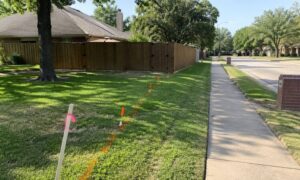
- Utility locations
- Drainage flow
- Building footprints
- Construction layout points
In many cases, survey mapping works within inches.
That level of detail explains why governments now restrict exporting high-resolution mapping data. High-precision maps can show important facilities, road systems, and land features that were once hard to see.
In other words, mapping now holds power.
And when something holds power, it also carries responsibility.
What “High-Precision” Really Means
Let’s keep this simple.
High-precision survey mapping does not mean “clearer pictures.” It means real, measured accuracy.
For example:
- A small height error can change how water flows.
- A small line shift can affect a property boundary.
- A wrong elevation can affect flood zone results.
Now imagine a stormwater system built on wrong elevation data. Water could flow toward a building instead of away from it.
As a civil engineer, I see how elevation errors create real costs. Crews must move soil again. Engineers must update plans. Permits can slow down.
Therefore, high-precision survey mapping protects projects before problems start.
Why Governments Started Restricting Map Exports
Recently, some countries allowed global companies to export detailed map data — but only with strict rules.
Why?
Because high-resolution maps can show:
- Military sites
- Power plants
- Major roads
- Public systems
If that information spreads without control, risks grow.
While this may sound far from Charlotte projects, the lesson applies here too.
If governments care deeply about mapping accuracy and control, your project should too.
What This Means for Developers in Charlotte
Charlotte continues to grow quickly. New neighborhoods and business sites open every year. With that growth comes stricter reviews and digital plan checks.
So how does global map control affect local projects?
First, it highlights data ownership.
Who stores your survey mapping files? Where are they saved? Can you access them years later?
Next, it raises the issue of reliability.
Consumer map platforms change often. Sometimes they require logins. Sometimes they update or blur areas.
However, construction projects need steady, verified data. You cannot design grading plans on maps that may change.
Finally, it brings up liability.
If your survey mapping lacks clear records, disputes become harder to defend. Courts and permit offices rely on certified survey data, not online map screenshots.
Therefore, professional survey mapping becomes your safety layer.
The Hidden Risk of Relying on Consumer Maps
Many property owners believe that modern map apps show enough detail. The images look sharp and easy to use.
But here’s the issue: those platforms do not promise survey-grade accuracy.
They do not:
- Certify boundary lines
- Confirm elevation points
- List coordinate systems
- Provide height reference details
In addition, companies can change rules at any time.
Recently, users complained about forced logins and other updates. While that may seem small, it shows something important. These platforms serve everyday users, not engineers and builders.
Meanwhile, survey mapping professionals build reports around certified control points and clear accuracy standards.
That difference matters during construction, permits, and legal review.
How Professional Survey Mapping Protects Your Project

Professional survey mapping follows clear steps.
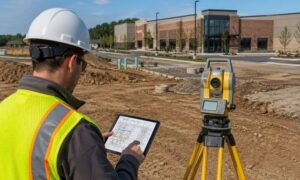
Surveyors set control points using special GPS tools tied to trusted reference systems. They document coordinate systems used in North Carolina. They state elevation references clearly. They check accuracy before delivery.
Because of this process, engineers trust the data. Contractors build from it. Review offices approve it faster. Over time, many developers learn that working with professional survey mapping services in Charlotte simply reduces stress during design and construction.
More importantly, you can defend it if questions arise.
For example, imagine a boundary dispute during a subdivision project. A professional survey mapping report includes field notes, control records, and certified stamps. That carries weight.
By contrast, a simple online map image does not.
Charlotte’s Growth Raises the Stakes
Charlotte keeps expanding. New homes rise. Roads improve. Business areas redevelop.
As space gets tighter, survey mapping becomes even more important.
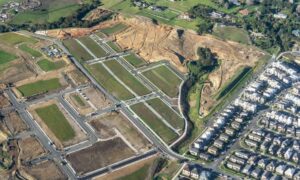
Closer utility lines leave less room for mistakes. Drainage systems need precise grading. Subdivision layouts depend on correct boundary lines.
In addition, local offices now require digital plan uploads. Engineers submit surface files and drawings online.
If mapping data lacks accuracy or records, reviewers flag it quickly.
Therefore, professional survey mapping saves time before delays begin.
Survey Mapping Is Strategic
Recent global news about high-precision map exports sends a clear message.
Mapping data matters.
Governments treat it as critical infrastructure. Developers should treat it as project infrastructure.
When you invest in professional survey mapping, you invest in:
- Fewer construction risks
- Faster permits
- Clear boundary lines
- Reliable grading plans
- Long-term data access
Moreover, you protect yourself from costly redesigns and disputes.
Final Thoughts
At first, global map export laws may seem far from Charlotte projects. However, the lesson applies locally.
High-precision mapping carries value and responsibility.
Survey mapping does much more than draw lines. It supports drainage design, boundary clarity, utility layout, and construction planning. It affects permits, budgets, and timelines.
Therefore, do not treat it as a small step.
If you plan a subdivision, commercial site, or home build, start with professional survey mapping. Build on verified data, not changing consumer platforms.
Today, mapping is not just information.
It is infrastructure.